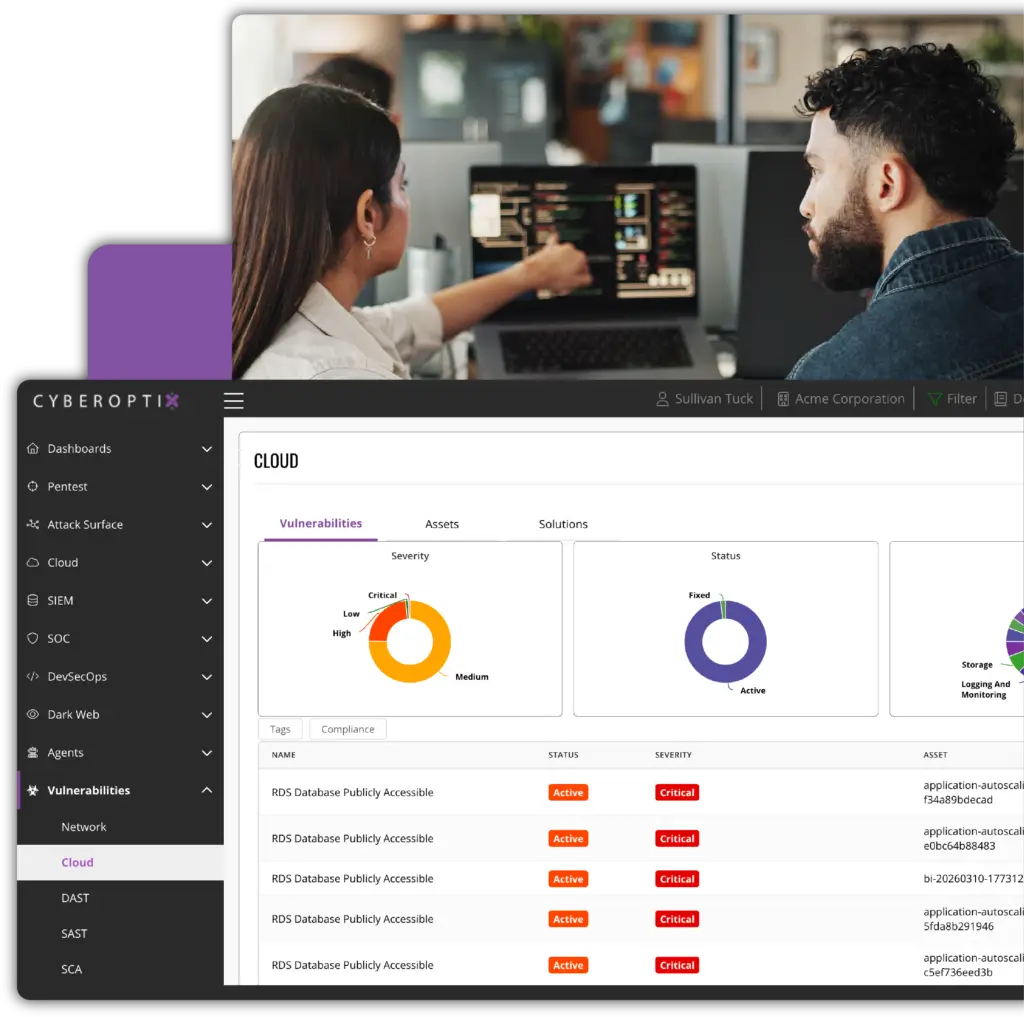
Giving security teams complete visibility and control across their cloud environment, from misconfigurations to active threats to continuous compliance.
Cloud Posture Management and Misconfiguration Detection
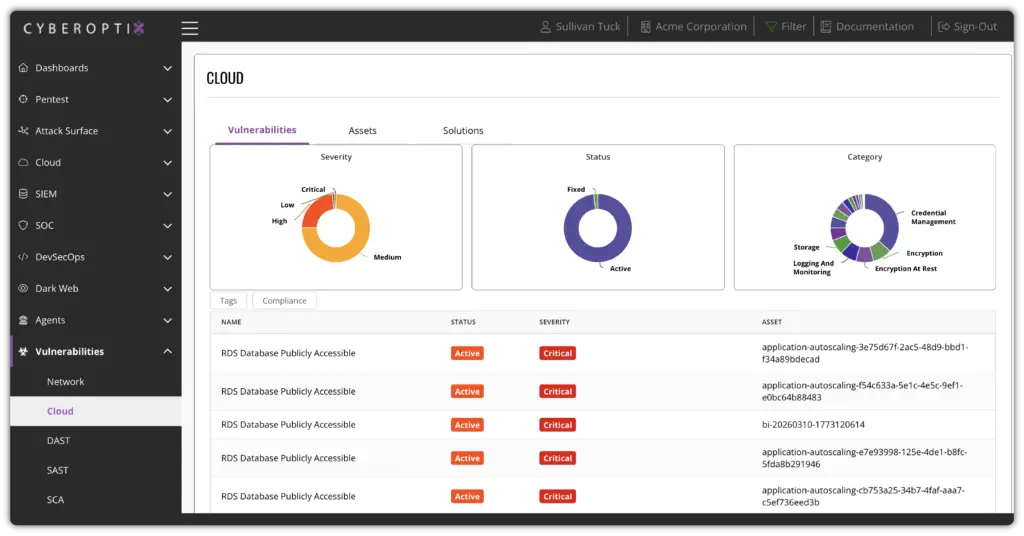
Misconfigurations are the leading cause of cloud breaches. CyberOptix continuously scans your cloud environment—AWS, Azure, GCP—identifying insecure storage buckets, overly permissive IAM roles, open ports, and hundreds of other risky settings before attackers find them first.
Cloud security posture is monitored in real time, not on a scan schedule. Every new resource is evaluated on deployment, so drift is caught immediately and your attack surface stays under control.
Cloud security monitoring is built directly into your cloud environment, continuously identifying and validating exploitable misconfigurations and threats as infrastructure changes—before they ever become breaches.
Cloud security becomes part of your operational baseline instead of a periodic checkpoint. Risks are identified early, validated in context, and addressed before they can be exploited in the wild.
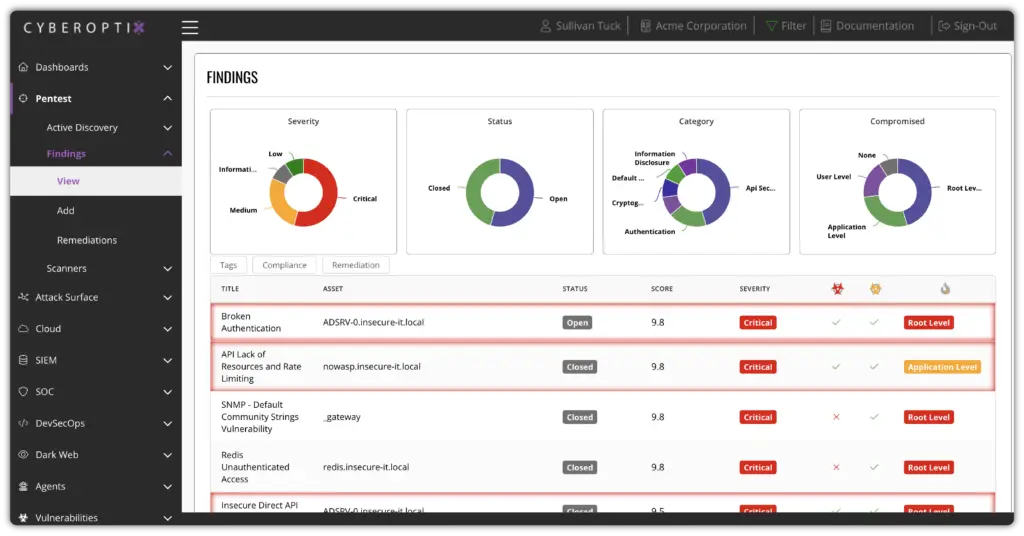
Not all cloud security findings are equally urgent. CyberOptix correlates misconfigurations, vulnerabilities, and exposures with real-world exploitability and business context—so your team knows exactly which issues to fix first and why.
Instead of drowning in alerts, security teams see a clear, ranked view of cloud risk. The highest-impact issues are surfaced to the right owners with the context needed to act, reducing mean time to remediation across the entire cloud environment.
Cloud risks are validated for real-world exploitability, prioritized by impact, and routed to the right teams with clear ownership and remediation context.
Instead of overwhelming teams with static reports, cloud risk is prioritized based on exploitability and business impact. The right issues are surfaced to the right owners, accelerating remediation and preventing repeat cloud exposures.
Each cloud deployment benefits from the same consistent scanning and validation process, reducing configuration drift and improving cloud security posture over time.
Security posture improves continuously, not just at audit moments. Each new resource deployment benefits from the same level of monitoring, validation, and visibility, reducing drift and eliminating surprise cloud vulnerabilities before they are exploited.
Built to Reduce Real Cloud Risk Without Disrupting Operations
CyberOptix delivers cloud security as an operational capability, not a point-in-time exercise. These core capabilities work together to continuously identify exploitable cloud risk, prioritize what matters, and help teams remediate issues as part of everyday operations.
Detect cloud misconfigurations before they become breaches.
Identify insecure cloud configurations and exposed resources across AWS, Azure, and GCP as they are deployed and updated. This enables teams to catch risky settings early, when fixes are faster, less disruptive, and more cost-effective.
Monitor cloud workloads in real environments, in real time.
Monitor running cloud workloads to uncover threats and vulnerabilities that only appear during active operation and user interaction. This provides visibility into exploitable exposures that configuration scans alone cannot detect.
Control third-party and supply chain risk across your cloud.
Identify vulnerable cloud provider components, third-party integrations, and open-source dependencies deployed within your cloud infrastructure. This helps teams reduce supply chain risk and address inherited vulnerabilities that often go unnoticed in cloud environments.
Embed cloud security controls directly into infrastructure delivery.
Integrate cloud security scanning and policy enforcement into infrastructure-as-code pipelines and deployment workflows so checks run automatically before provisioning, merges, and releases. This keeps cloud security aligned with engineering workflows without adding manual steps.
CyberOptix turns cloud security from a periodic task into a repeatable capability built into how infrastructure is delivered. See how continuous monitoring, workflow integration, and centralized risk management work together to reduce real cloud risk without slowing development.