





The CyberOptix Platform
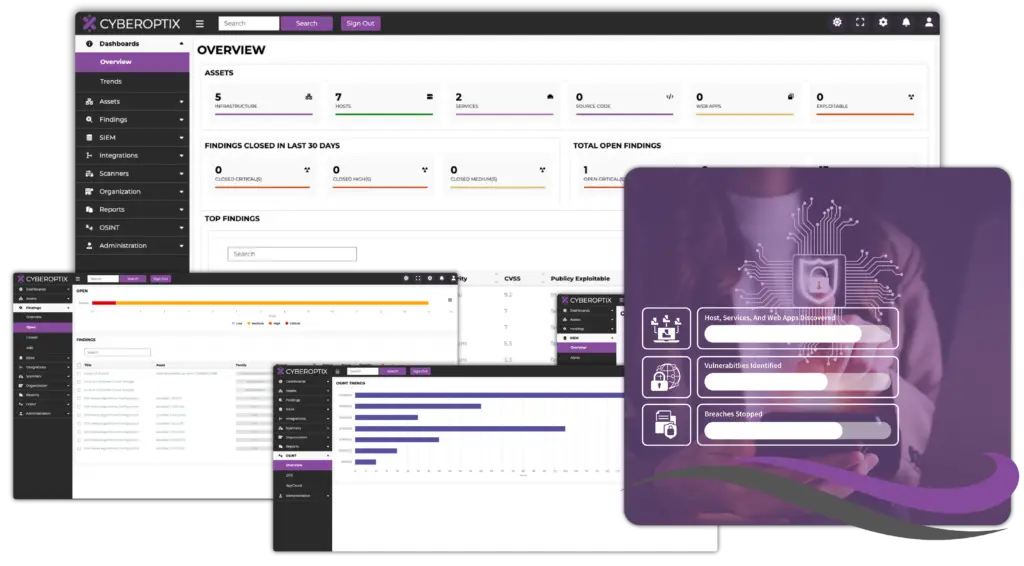
Streamline Cybersecurity Operations and Enhance Collaboration With CyberOptix.
Confidently address a wide variety of threats from one place
Reduce cost by unifying five different cybersecurity solutions
Improve collaboration between red and blue teams
Start Today

Struggling With to Many Tools? CyberOptix is Your Solution
Managing vulnerability identification and remediation in today’s fast-paced environment is harder than ever. Your security team is juggling dozens of fragmented security tools and struggling to collaborate effectively, resulting in a missed opportunity to remediate vulnerabilities more efficiently.
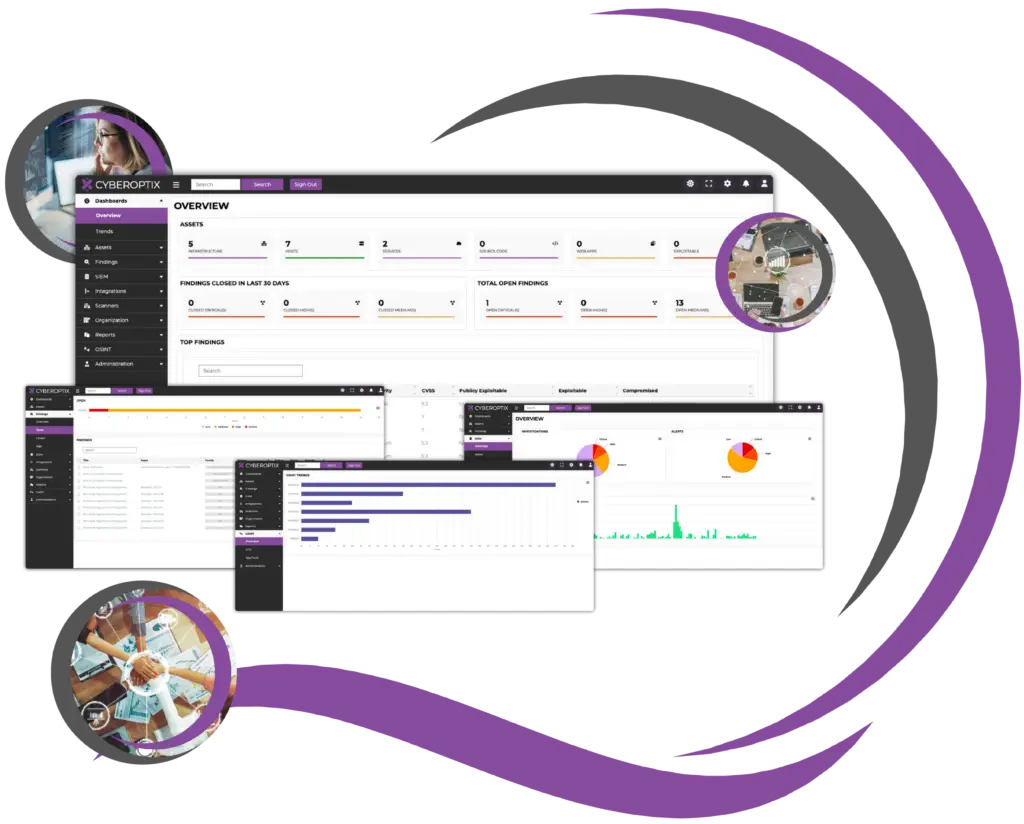

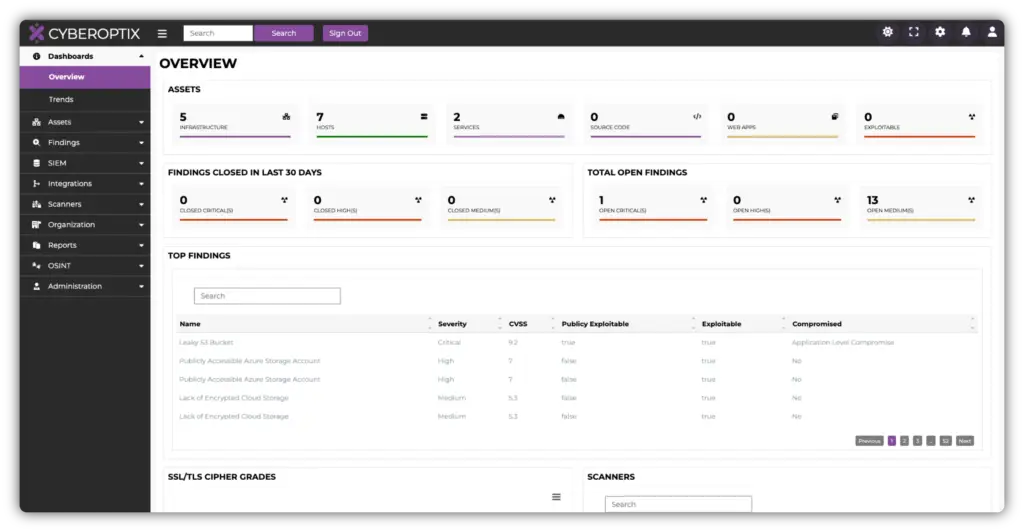
CyberOptix understands these challenges and was designed to address these problems. Our platform brings together essential cybersecurity tools like vulnerability scanning, risk analysis, open source intelligence, Attack Surface Management, SIEM, DevSecOps, Dark Web Monitoring, and more into a single, unified interface, giving your team the visibility, efficiency, and collaboration they need to succeed. CyberOptix helps you take control of your security strategy and stay ahead of threats, empowering your organization to proactively identify and address vulnerabilities.
CyberOptix Features
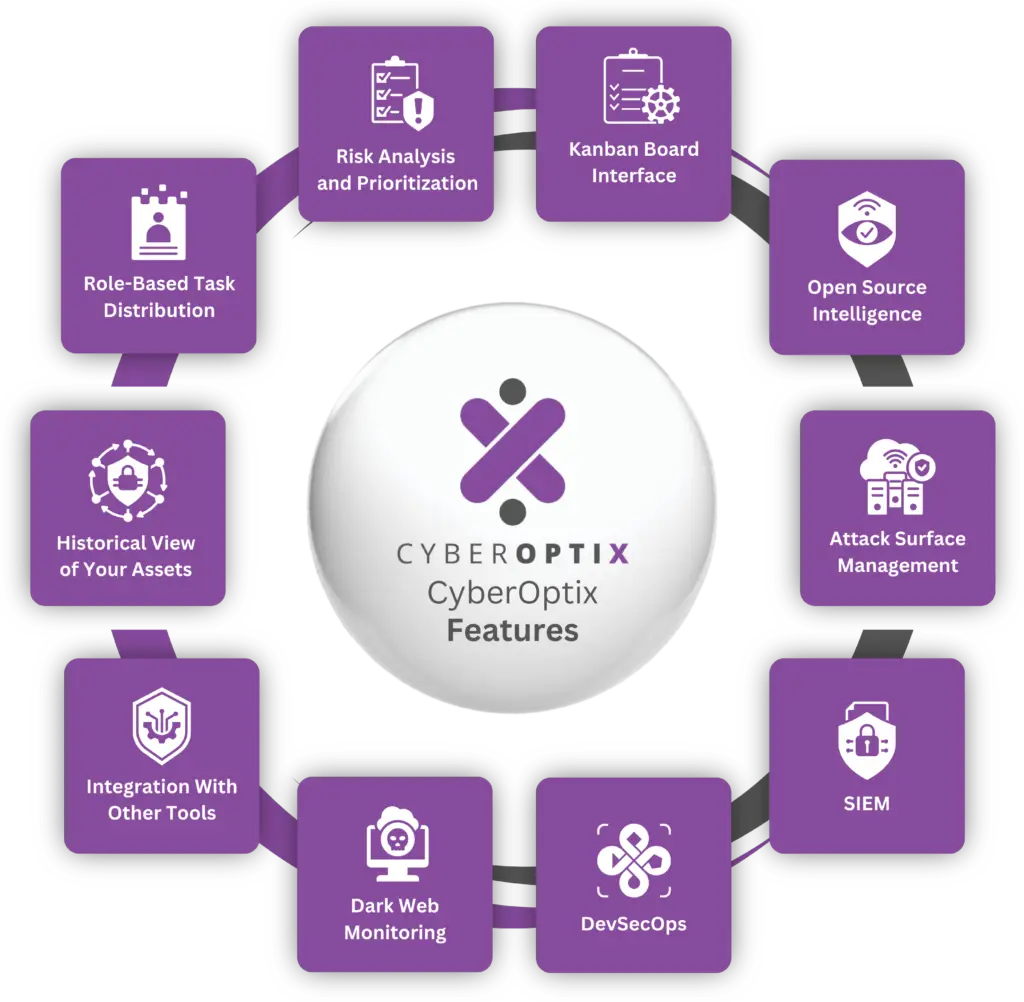
The CyberOptix platform is home to a comprehensive suite of capabilities designed to streamline cybersecurity operations. Key features include:
Historical Vew of Your Assets
CyberOptix allows you to access past versions of your assets, complete with a detailed snapshot of all vulnerabilities present at that specific point in time.
Role-Based Task Distribution
Assign tasks to specific team members based on their role, optimizing productivity and streamlining vulnerability remediation.
Risk Analysis and Prioritization
Automatically categorize and prioritize vulnerabilities based on risk level, allowing your team to focus on resolving the most pressing issues.
Kanban Board Interface
Organize tasks and track remediation progress visually on our kanban board interface, improving team collaboration and streamlining workflows.
Open Source Intelligence
Integrate with OSINT tools to consolidate publicly available information into one platform, enhancing your understanding of threats.
Attack Surface Management
Map and monitor your organization’s internal, external, and on-prim assets from just one location, so you can stay ahead of attackers by reducing your attack surface in real time.
SIEM
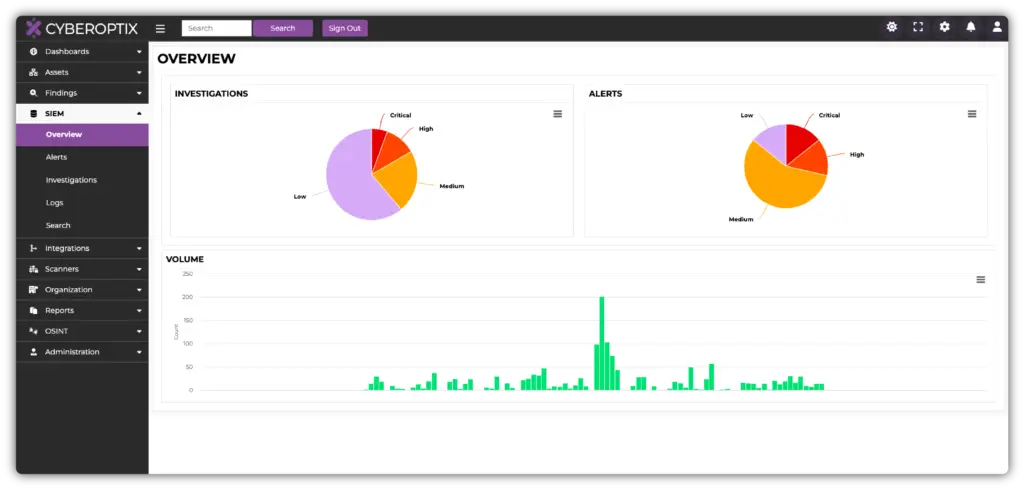
Go beyond just monitoring and responding to threats in real time with our platform’s focus on enhancing collaboration between red and blue teams, so you can reap the benefits of purple teaming.
DevSecOps
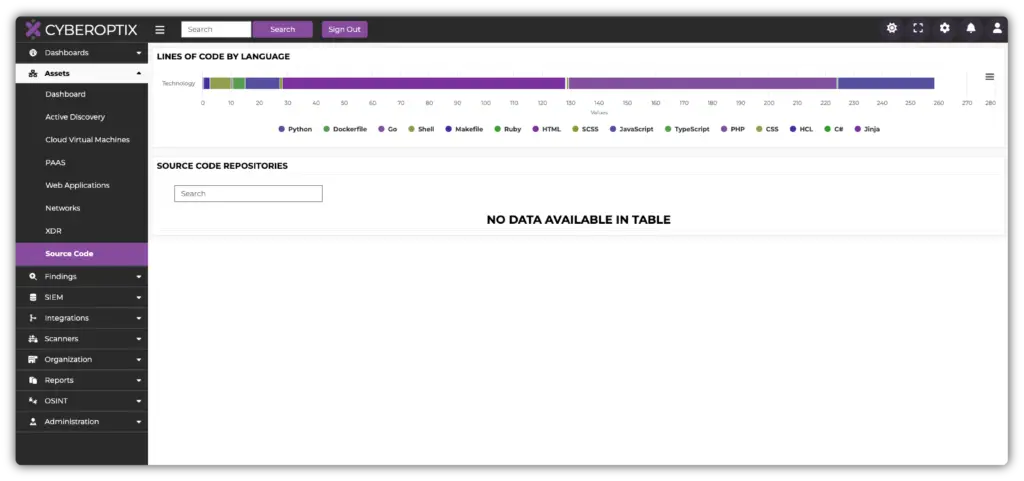
Integrate security into your development processes by seamless integrating with DAST, SAST, Git Repositories, and other security tools for faster, safer software releases.
Dark Web Monitoring
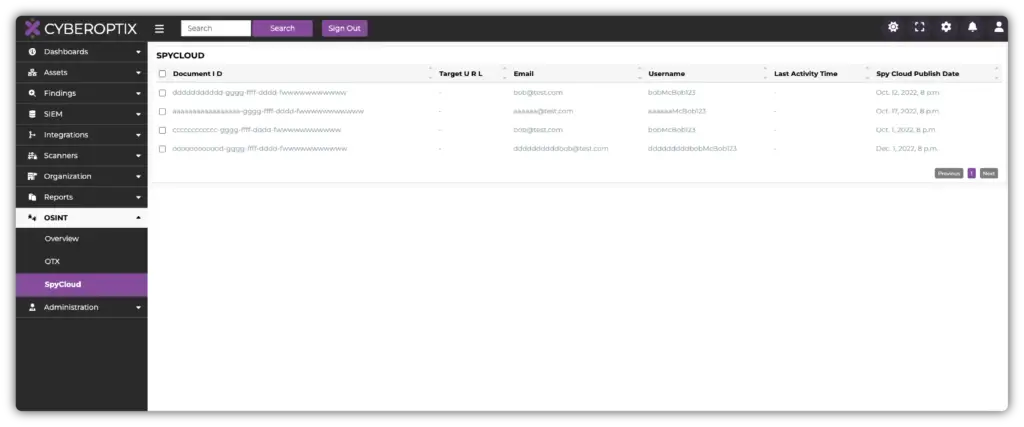
Proactively safeguard your organization from emerging threats by detecting and addressing exposed credentials, gauging executive data exposure, and monitoring vendor breach records.
Integration With Other Tools
Seamlessly connect CyberOptix with other security tools for a unified approach. Enhance your existing workflows and maximize efficiency.
Offensive Use Cases
Offensive teams leverage CyberOptix to uncover vulnerabilities and simulate realistic attack scenarios, giving them the tools and insights needed to test the strength of an organization’s defenses. By providing detailed visibility into internal and external risks, the platform allows offensive teams to refine their methodologies, identify exploitable gaps, and provide actionable data to improve overall security strategies.
Craft Attack Scenarios
Use vulnerability insights from Attack Surface Management and Dark Web Monitoring to craft realistic attack scenarios.
Increase Testing Precision and Coverage
Gain a comprehensive view of vulnerabilities to expand testing coverage and precision.
Analyze Exploitable Security Practices
Analyze how security practices in cloud environments and internal systems can be exploited by attackers.
Enhance Vulnerability Mitigation
Deliver detailed findings to defensive teams to help enhance their mitigation strategies.
Defensive Use Cases
Defensive teams rely on CyberOptix to proactively monitor risks, close gaps, and strengthen their organization’s defenses. By integrating real-time insights with a kanban board interface to track remediation, and role based task distribution, our platform empowers defensive teams to respond effectively to threats and embed security into every layer of the organization’s infrastructure.
Track Vulnerabilities With a Kanban Board Interface
Track vulnerabilities across cloud, on-premises, and hybrid environments with a kanban board interface.
Identify Over 20 Different Types of Vulnerabilities
Identify over 20 different types of vulnerabilities in your networks, systems and applications.
Integrate Security Into Your Entire SDLC
Integrate with DevSecOps workflows to address risks early in the development lifecycle.
Quickly Neutralize Threats From a Centralized System
Use centralized data and analysis to quickly detect and neutralize threats across all your assets.
Streamline Processes With Role-Based Distribution
Distribute task to your security team based on their role, streamlining and simplifying the remediation process.
CyberOptix Integrations
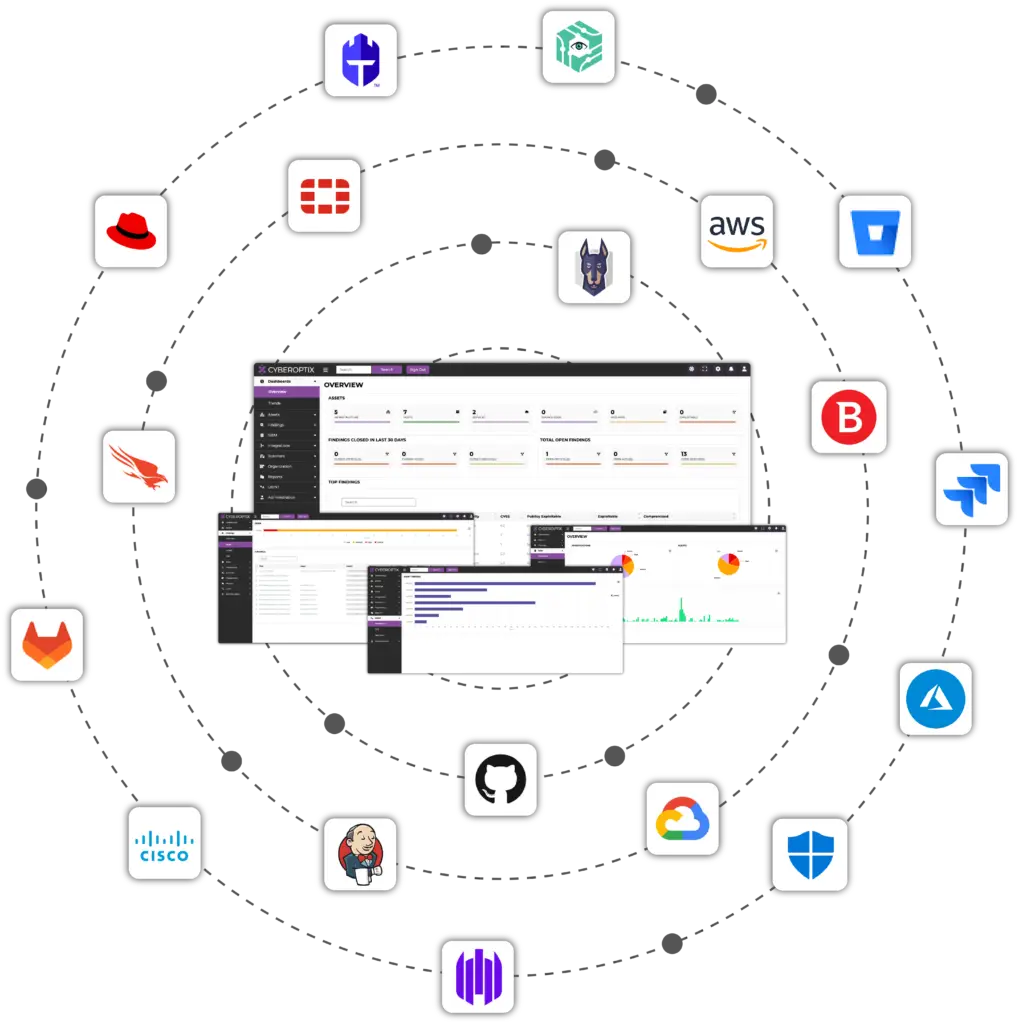
The CyberOptix platform integrates with a wide range of leading tools and technologies, including Microsoft Azure, AWS, Google Cloud, GitHub, GitLab, Bitbucket, Jenkins, Red Hat, Snyk, Cisco, Fortinet, CrowdStrike, Microsoft Defender, Bitdefender, and more. These integrations provide a cohesive ecosystem for managing cybersecurity across development, cloud, endpoint, network, and on-premises environments.
By consolidating data and automating processes, CyberOptix empowers security teams to collaboratively address a wide variety of threats and vulnerabilities from one platform.
Struggling With to Many Tools? CyberOptix is Your Solution
Managing vulnerability identification and remediation in today’s fast-paced environment is harder than ever. Your security team is juggling dozens of fragmented security tools and struggling to collaborate effectively, resulting in a missed opportunity to remediate vulnerabilities more efficiently.
CyberOptix understands these challenges and was designed to address these problems. Our platform brings together essential cybersecurity tools like vulnerability scanning, risk analysis, open source intelligence, Attack Surface Management, SIEM, DevSecOps, Dark Web Monitoring, and more into a single, unified interface, giving your team the visibility, efficiency, and collaboration they need to succeed. CyberOptix helps you take control of your security strategy and stay ahead of threats, empowering your organization to proactively identify and address vulnerabilities.
CyberOptix Features
The CyberOptix platform is home to a comprehensive suite of capabilities designed to streamline cybersecurity operations. Key features include:
Historical Vew of Your Assets
CyberOptix allows you to access past versions of your assets, complete with a detailed snapshot of all vulnerabilities present at that specific point in time.
Role-Based Task Distribution
Assign tasks to specific team members based on their role, optimizing productivity and streamlining vulnerability remediation.
Risk Analysis and Prioritization
Automatically categorize and prioritize vulnerabilities based on risk level, allowing your team to focus on resolving the most pressing issues.
Kanban Board Interface
Organize tasks and track remediation progress visually on our kanban board interface, improving team collaboration and streamlining workflows.
Open Source Intelligence
Integrate with OSINT tools to consolidate publicly available information into one platform, enhancing your understanding of threats.
Attack Surface Management
Map and monitor your organization’s internal, external, and on-prim assets from just one location, so you can stay ahead of attackers by reducing your attack surface in real time.
SIEM
Go beyond just monitoring and responding to threats in real time with our platform’s focus on enhancing collaboration between red and blue teams, so you can reap the benefits of purple teaming.
DevSecOps
Integrate security into your development processes by seamless integrating with DAST, SAST, Git Repositories, and other security tools for faster, safer software releases.
Dark Web Monitoring
Proactively safeguard your organization from emerging threats by detecting and addressing exposed credentials, gauging executive data exposure, and monitoring vendor breach records.
Integration With Other Tools
Seamlessly connect CyberOptix with other security tools for a unified approach. Enhance your existing workflows and maximize efficiency.
Historical Vew of Your Assets
CyberOptix allows you to access past versions of your assets, complete with a detailed snapshot of all vulnerabilities present at that specific point in time.
Role-Based Task Distribution
Assign tasks to specific team members based on their role, optimizing productivity and streamlining vulnerability remediation.
Risk Analysis and Prioritization
Automatically categorize and prioritize vulnerabilities based on risk level, allowing your team to focus on resolving the most pressing issues.
Kanban Board Interface
Organize tasks and track remediation progress visually on our kanban board interface, improving team collaboration and streamlining workflows.
Open Source Intelligence
Integrate with OSINT tools to consolidate publicly available information into one platform, enhancing your understanding of threats.
Attack Surface Management
Map and monitor your organization’s internal, external, and on-prim assets from just one location, so you can stay ahead of attackers by reducing your attack surface in real time.
SIEM
Go beyond just monitoring and responding to threats in real time with our platform’s focus on enhancing collaboration between red and blue teams, so you can reap the benefits of purple teaming.
DevSecOps
Integrate security into your development processes by seamless integrating with DAST, SAST, Git Repositories, and other security tools for faster, safer software releases.
Dark Web Monitoring
Proactively safeguard your organization from emerging threats by detecting and addressing exposed credentials, gauging executive data exposure, and monitoring vendor breach records.
Integration With Other Tools
Seamlessly connect CyberOptix with other security tools for a unified approach. Enhance your existing workflows and maximize efficiency.
Offensive Use Cases
Offensive teams leverage CyberOptix to uncover vulnerabilities and simulate realistic attack scenarios, giving them the tools and insights needed to test the strength of an organization’s defenses. By providing detailed visibility into internal and external risks, the platform allows offensive teams to refine their methodologies, identify exploitable gaps, and provide actionable data to improve overall security strategies.
Craft Attack Scenarios
Use vulnerability insights from Attack Surface Management and Dark Web Monitoring to craft realistic attack scenarios.
Increase Testing Precision and Coverage
Gain a comprehensive view of vulnerabilities to expand testing coverage and precision.
Analyze Exploitable Security Practices
Analyze how security practices in cloud environments and internal systems can be exploited by attackers.
Enhance Vulnerability Mitigation
Deliver detailed findings to defensive teams to help enhance their mitigation strategies.
Craft Attack Scenarios
Use vulnerability insights from Attack Surface Management and Dark Web Monitoring to craft realistic attack scenarios.
Increase Testing Precision and Coverage
Gain a comprehensive view of vulnerabilities to expand testing coverage and precision.
Analyze Exploitable Security Practices
Analyze how security practices in cloud environments and internal systems can be exploited by attackers.
Enhance Vulnerability Mitigation
Deliver detailed findings to defensive teams to help enhance their mitigation strategies.
Defensive Use Cases
Defensive teams rely on CyberOptix to proactively monitor risks, close gaps, and strengthen their organization’s defenses. By integrating real-time insights with a kanban board interface to track remediation, and role based task distribution, our platform empowers defensive teams to respond effectively to threats and embed security into every layer of the organization’s infrastructure.
Track Vulnerabilities With a Kanban Board Interface
Track vulnerabilities across cloud, on-premises, and hybrid environments with a kanban board interface.
Identify Over 20 Different Types of Vulnerabilities
Identify over 20 different types of vulnerabilities in your networks, systems and applications.
Integrate Security Into Your Entire SDLC
Integrate with DevSecOps workflows to address risks early in the development lifecycle.
Quickly Neutralize Threats From a Centralized System
Use centralized data and analysis to quickly detect and neutralize threats across all your assets.
Streamline Processes With Role-Based Distribution
Distribute task to your security team based on their role, streamlining and simplifying the remediation process.
Track Vulnerabilities With a Kanban Board Interface
Track vulnerabilities across cloud, on-premises, and hybrid environments with a kanban board interface.
Identify Over 20 Different Types of Vulnerabilities
Identify over 20 different types of vulnerabilities in your networks, systems and applications.
Integrate Security Into Your Entire SDLC
Integrate with DevSecOps workflows to address risks early in the development lifecycle.
Quickly Neutralize Threats From a Centralized System
Use centralized data and analysis to quickly detect and neutralize threats across all your assets.
Streamline Processes With Role-Based Distribution
Distribute task to your security team based on their role, streamlining and simplifying the remediation process.
CyberOptix Integrations
The CyberOptix platform integrates with a wide range of leading tools and technologies, including Microsoft Azure, AWS, Google Cloud, GitHub, GitLab, Bitbucket, Jenkins, Red Hat, Snyk, Cisco, Fortinet, CrowdStrike, Microsoft Defender, Bitdefender, and more. These integrations provide a cohesive ecosystem for managing cybersecurity across development, cloud, endpoint, network, and on-premises environments.
By consolidating data and automating processes, CyberOptix empowers security teams to collaboratively address a wide variety of threats and vulnerabilities from one platform.

CyberOptix’s Other Licenses
The CyberOptix Platform offers five distinct licenses, all of which are designed to bridge the gap between offensive and defensive teams, helping them to collaboratively identify and remediate vulnerabilities.
Each license addresses a specific set of threats, and provides your security team with a unique set of tools to address them.
Wether you struggle with remediating dark web threats, securing your software, or reducing vulnerabilities in your cloud infrastructure, we have a license that can help you.
How Offensive Teams Use CyberOptix’s Penetration Testing Management License
The Penetration Testing Management License serves as the foundation for offensive security teams to identify vulnerabilities, conduct targeted penetration tests, and refine their strategies.
-
Perform detailed scans across networks, hosts, and web applications, uncovering weaknesses and entry points. -
Integrate with tools like Metasploit, Nmap, and GVM to simulate attacks and test vulnerabilities effectively. -
Use the kanban board and findings management system to document vulnerabilities and plan attack scenarios.

Learn More About Penetration Testing Management
How Defensive Teams Use CyberOptix’s Penetration Testing Management License
Defensive teams utilize the Penetration Testing Management License to gain a clear understanding of vulnerabilities within their organization’s infrastructure.
-
Identify and track vulnerabilities across systems to ensure no risks are overlooked. -
Track vulnerability remediation through the kanban board interface. -
Leverage role-based task distribution and actionable reports to accelerate remediation time.

Learn More About Penetration Testing Management
How Offensive Teams Use Attack Surface Management
CyberOptix’s Attack Surface Management License provides offensive teams with visibility into both internal and external vulnerabilities, allowing them to craft realistic attack scenarios.
-
Identify vulnerabilities across cloud and on-premises systems to simulate potential attack scenarios. -
Evaluate misconfigurations and exploitable gaps in cloud systems that could be leveraged by attackers. -
Leverage ASM’s asset discovery and detailed insights to pinpoint high-risk paths that attackers might exploit.

Learn More About Attack Surface Management
How Defensive Teams Use Attack Surface Management
CyberOptix’s Attack Surface Management License provides offensive teams with visibility into both internal and external vulnerabilities, allowing them to craft realistic attack scenarios.
-
Gain a clear inventory of internal and external assets, reducing blind spots in the attack surface. -
Identify and resolve misconfigurations and vulnerabilities before attackers can exploit them. -
Use detailed reports to inform patching, mitigation, and long-term security strategies.

Learn More About Attack Surface Management
How Offensive Teams Use SIEM
The CyberOptix’s SIEM License empowers offensive teams to conduct advanced simulations and test an organization’s defenses by leveraging real-time insights into logs and security events.
-
Use real-time log data to test how well an organization’s defenses respond to simulated attacks. -
Analyze the visibility of offensive activities to better understand detection and improve methodologies. -
Work alongside defensive teams in controlled simulations to uncover vulnerabilities and strengthen defenses.
How Defensive Teams Use SIEM
Defensive teams rely on CyberOptix’s SIEM License to gain real-time visibility into security events and logs, enabling them to detect and respond to threats with speed and accuracy.
-
Monitor security events and logs to identify and respond to threats as they occur. -
Leverage insights from purple teaming simulations to strengthen defensive strategies and close security gaps. -
Use correlated log data to prioritize and accelerate responses to potential breaches, reducing overall risk.
How Offensive Teams Use DevSecOps
Offensive teams leverage CyberOptix’s DevSecOps License to uncover application vulnerabilities with precision, enabling targeted and comprehensive penetration testing.
-
Identify vulnerabilities in applications through SAST, DAST, and repository integrations, focusing on exploitable code. -
Leverage vulnerability data to design more precise and realistic penetration testing strategies. -
Provide detailed insights into exploitable weaknesses to improve code security during development.
How Defensive Teams Use DevSecOps
Defensive teams rely on CyberOptix’s DevSecOps License to seamlessly integrate security into the Software Development Lifecycle (SDLC), ensuring vulnerabilities are identified and mitigated early, before they reach production.
-
Monitor and resolve risks directly within the CI/CD pipeline and source code repositories. -
Seamlessly connect with tools like GitHub and Snyk to address risks as part of the development workflow. -
Focus on high-priority vulnerabilities to reduce the attack surface and ensure secure code deployment.
How Offensive Teams Use Dark Web Monitoring
Offensive teams use CyberOptix’s Dark Web License to simulate real-world attack scenarios, leveraging intelligence gathered from dark web sources.
-
Use intelligence from exposed credentials and breach data to simulate potential threat actor activities. -
Analyze third-party vulnerabilities and executive exposures to uncover new attack vectors. -
Provide insights from simulations that help defensive teams address gaps revealed through dark web intelligence.

Learn More About Dark Web Monitoring
How Defensive Teams Use Dark Web Monitoring
Defensive teams rely on CyberOptix’s Dark Web License to proactively address risks identified on the dark web, such as stolen credentials, vendor breach records, and executive exposure.
-
Identify and reset stolen credentials to prevent unauthorized access. -
Monitor and mitigate risks associated with executive data exposure on the dark web. -
Identify and assess vulnerabilities in vendor breach data to minimize supply chain threats.

Learn More About Dark Web Monitoring
How Offensive Teams Use CyberOptix’s Penetration Testing Management License
The Penetration Testing Management License serves as the foundation for offensive security teams to identify vulnerabilities, conduct targeted penetration tests, and refine their strategies.
-
Perform detailed scans across networks, hosts, and web applications, uncovering weaknesses and entry points. -
Integrate with tools like Metasploit, Nmap, and GVM to simulate attacks and test vulnerabilities effectively. -
Use the kanban board and findings management system to document vulnerabilities and plan attack scenarios.

Learn More About Penetration Testing Management
How Defensive Teams Use CyberOptix’s Penetration Testing Management License
Defensive teams utilize the Penetration Testing Management License to gain a clear understanding of vulnerabilities within their organization’s infrastructure.
-
Identify and track vulnerabilities across systems to ensure no risks are overlooked. -
Track vulnerability remediation through the kanban board interface. -
Leverage role-based task distribution and actionable reports to accelerate remediation time.

Learn More About Penetration Testing Management
How Offensive Teams Use CyberOptix’s Penetration Testing Management License
The Penetration Testing Management License serves as the foundation for offensive security teams to identify vulnerabilities, conduct targeted penetration tests, and refine their strategies.
-
Perform detailed scans across networks, hosts, and web applications, uncovering weaknesses and entry points. -
Integrate with tools like Metasploit, Nmap, and GVM to simulate attacks and test vulnerabilities effectively. -
Use the kanban board and findings management system to document vulnerabilities and plan attack scenarios.

Learn More About Penetration Testing Management
How Defensive Teams Use CyberOptix’s Penetration Testing Management License
Defensive teams utilize the Penetration Testing Management License to gain a clear understanding of vulnerabilities within their organization’s infrastructure.
-
Identify and track vulnerabilities across systems to ensure no risks are overlooked. -
Track vulnerability remediation through the kanban board interface. -
Leverage role-based task distribution and actionable reports to accelerate remediation time.

Learn More About Penetration Testing Management
How Offensive Teams Use Attack Surface Management
CyberOptix’s Attack Surface Management License provides offensive teams with visibility into both internal and external vulnerabilities, allowing them to craft realistic attack scenarios.
-
Identify vulnerabilities across cloud and on-premises systems to simulate potential attack scenarios. -
Evaluate misconfigurations and exploitable gaps in cloud systems that could be leveraged by attackers. -
Leverage ASM’s asset discovery and detailed insights to pinpoint high-risk paths that attackers might exploit.

Learn More About Attack Surface Management
How Defensive Teams Use Attack Surface Management
CyberOptix’s Attack Surface Management License provides offensive teams with visibility into both internal and external vulnerabilities, allowing them to craft realistic attack scenarios.
-
Gain a clear inventory of internal and external assets, reducing blind spots in the attack surface. -
Identify and resolve misconfigurations and vulnerabilities before attackers can exploit them. -
Use detailed reports to inform patching, mitigation, and long-term security strategies.

Learn More About Attack Surface Management
How Offensive Teams Use Attack Surface Management
CyberOptix’s Attack Surface Management License provides offensive teams with visibility into both internal and external vulnerabilities, allowing them to craft realistic attack scenarios.
-
Identify vulnerabilities across cloud and on-premises systems to simulate potential attack scenarios. -
Evaluate misconfigurations and exploitable gaps in cloud systems that could be leveraged by attackers. -
Leverage ASM’s asset discovery and detailed insights to pinpoint high-risk paths that attackers might exploit.

Learn More About Attack Surface Management
How Defensive Teams Use Attack Surface Management
CyberOptix’s Attack Surface Management License provides offensive teams with visibility into both internal and external vulnerabilities, allowing them to craft realistic attack scenarios.
-
Gain a clear inventory of internal and external assets, reducing blind spots in the attack surface. -
Identify and resolve misconfigurations and vulnerabilities before attackers can exploit them. -
Use detailed reports to inform patching, mitigation, and long-term security strategies.

Learn More About Attack Surface Management
How Offensive Teams Use SIEM
The CyberOptix’s SIEM License empowers offensive teams to conduct advanced simulations and test an organization’s defenses by leveraging real-time insights into logs and security events.
-
Use real-time log data to test how well an organization’s defenses respond to simulated attacks. -
Analyze the visibility of offensive activities to better understand detection and improve methodologies. -
Work alongside defensive teams in controlled simulations to uncover vulnerabilities and strengthen defenses.
How Defensive Teams Use SIEM
Defensive teams rely on CyberOptix’s SIEM License to gain real-time visibility into security events and logs, enabling them to detect and respond to threats with speed and accuracy.
-
Monitor security events and logs to identify and respond to threats as they occur. -
Leverage insights from purple teaming simulations to strengthen defensive strategies and close security gaps. -
Use correlated log data to prioritize and accelerate responses to potential breaches, reducing overall risk.
How Offensive Teams Use SIEM
The CyberOptix’s SIEM License empowers offensive teams to conduct advanced simulations and test an organization’s defenses by leveraging real-time insights into logs and security events.
-
Use real-time log data to test how well an organization’s defenses respond to simulated attacks. -
Analyze the visibility of offensive activities to better understand detection and improve methodologies. -
Work alongside defensive teams in controlled simulations to uncover vulnerabilities and strengthen defenses.
How Defensive Teams Use SIEM
Defensive teams rely on CyberOptix’s SIEM License to gain real-time visibility into security events and logs, enabling them to detect and respond to threats with speed and accuracy.
-
Monitor security events and logs to identify and respond to threats as they occur. -
Leverage insights from purple teaming simulations to strengthen defensive strategies and close security gaps. -
Use correlated log data to prioritize and accelerate responses to potential breaches, reducing overall risk.
How Offensive Teams Use DevSecOps
Offensive teams leverage CyberOptix’s DevSecOps License to uncover application vulnerabilities with precision, enabling targeted and comprehensive penetration testing.
-
Identify vulnerabilities in applications through SAST, DAST, and repository integrations, focusing on exploitable code. -
Leverage vulnerability data to design more precise and realistic penetration testing strategies. -
Provide detailed insights into exploitable weaknesses to improve code security during development.
How Defensive Teams Use DevSecOps
Defensive teams rely on CyberOptix’s DevSecOps License to seamlessly integrate security into the Software Development Lifecycle (SDLC), ensuring vulnerabilities are identified and mitigated early, before they reach production.
-
Monitor and resolve risks directly within the CI/CD pipeline and source code repositories. -
Seamlessly connect with tools like GitHub and Snyk to address risks as part of the development workflow. -
Focus on high-priority vulnerabilities to reduce the attack surface and ensure secure code deployment.
How Offensive Teams Use DevSecOps
Offensive teams leverage CyberOptix’s DevSecOps License to uncover application vulnerabilities with precision, enabling targeted and comprehensive penetration testing.
-
Identify vulnerabilities in applications through SAST, DAST, and repository integrations, focusing on exploitable code. -
Leverage vulnerability data to design more precise and realistic penetration testing strategies. -
Provide detailed insights into exploitable weaknesses to improve code security during development.
How Defensive Teams Use DevSecOps
Defensive teams rely on CyberOptix’s DevSecOps License to seamlessly integrate security into the Software Development Lifecycle (SDLC), ensuring vulnerabilities are identified and mitigated early, before they reach production.
-
Monitor and resolve risks directly within the CI/CD pipeline and source code repositories. -
Seamlessly connect with tools like GitHub and Snyk to address risks as part of the development workflow. -
Focus on high-priority vulnerabilities to reduce the attack surface and ensure secure code deployment.
How Offensive Teams Use Dark Web Monitoring
Offensive teams use CyberOptix’s Dark Web License to simulate real-world attack scenarios, leveraging intelligence gathered from dark web sources.
-
Use intelligence from exposed credentials and breach data to simulate potential threat actor activities. -
Analyze third-party vulnerabilities and executive exposures to uncover new attack vectors. -
Provide insights from simulations that help defensive teams address gaps revealed through dark web intelligence.

Learn More About Dark Web Monitoring
How Defensive Teams Use Dark Web Monitoring
Defensive teams rely on CyberOptix’s Dark Web License to proactively address risks identified on the dark web, such as stolen credentials, vendor breach records, and executive exposure.
-
Identify and reset stolen credentials to prevent unauthorized access. -
Monitor and mitigate risks associated with executive data exposure on the dark web. -
Identify and assess vulnerabilities in vendor breach data to minimize supply chain threats.

Learn More About Dark Web Monitoring
How Offensive Teams Use Dark Web Monitoring
Offensive teams use CyberOptix’s Dark Web License to simulate real-world attack scenarios, leveraging intelligence gathered from dark web sources.
-
Use intelligence from exposed credentials and breach data to simulate potential threat actor activities. -
Analyze third-party vulnerabilities and executive exposures to uncover new attack vectors. -
Provide insights from simulations that help defensive teams address gaps revealed through dark web intelligence.

Learn More About Dark Web Monitoring
How Defensive Teams Use Dark Web Monitoring
Defensive teams rely on CyberOptix’s Dark Web License to proactively address risks identified on the dark web, such as stolen credentials, vendor breach records, and executive exposure.
-
Identify and reset stolen credentials to prevent unauthorized access. -
Monitor and mitigate risks associated with executive data exposure on the dark web. -
Identify and assess vulnerabilities in vendor breach data to minimize supply chain threats.

Learn More About Dark Web Monitoring
Ready to Streamline Your Cybersecurity Operations?
CyberOptix isn’t just another security tool—it’s your all-in-one platform for managing vulnerabilities, enhancing collaboration, and proactively addressing cyber risks. With its combination of five core solutions into one platform, CyberOptix empowers your team to collaboratively address threats from a single platform, safeguarding your organization’s most critical assets.
Contact us now to schedule a demo and discover how CyberOptix can revolutionize your organization’s approach to cybersecurity.